


.png)
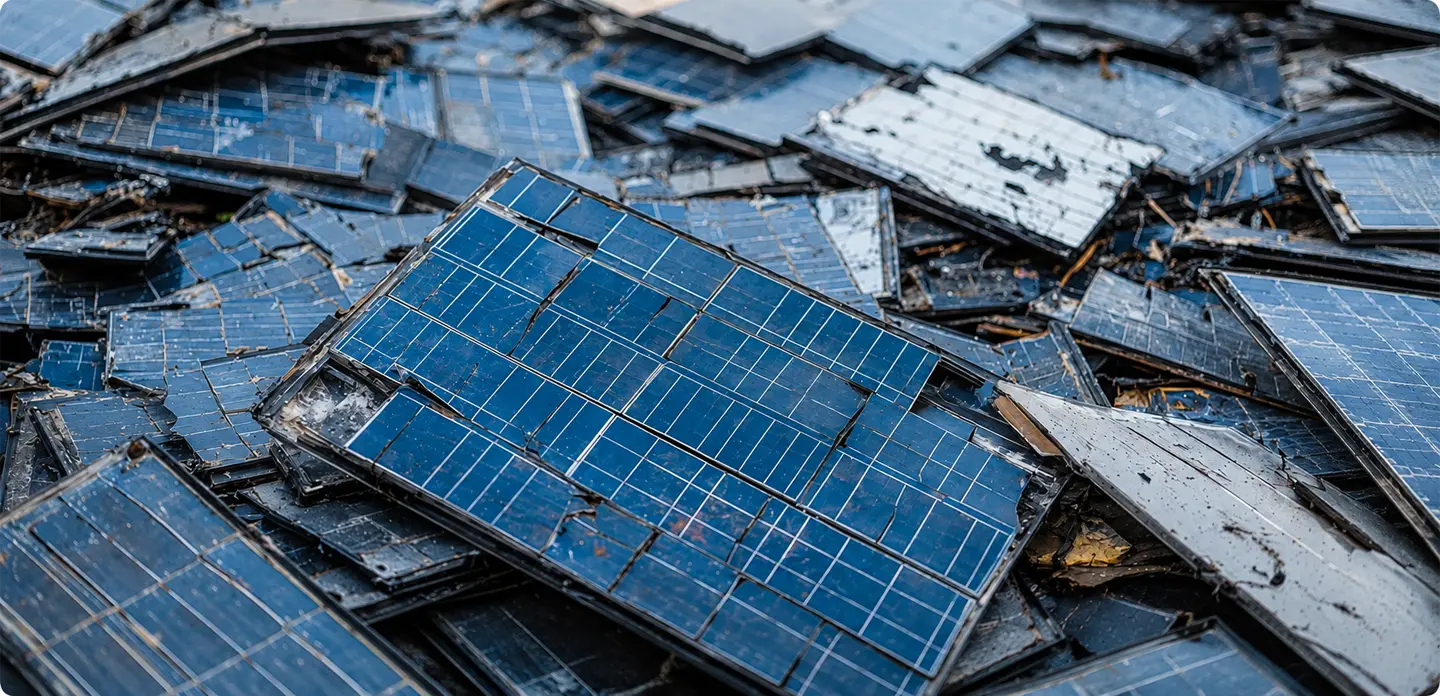
Every solar panel installed will one day have to be removed. When that time arrives, the owner faces three practical choices: send it to landfill, sell it on the secondary market, or recycle it. Each carries a different cost, a different environmental outcome, and different reputational and compliance risks. All of these options are still on the table, but the calculus is shifting rapidly as regulations tighten while recycling technology improves.
Here's how the three compare in 2026, and how to think about which applies to you.
The three options at a glance
Figures indicative; costs vary by region, panel type and age, logistics, tipping and gate fees.
Landfill: cheapest today, riskiest tomorrow
At $1 to $9 per panel, landfilling is by far the cheapest disposal route — which is exactly why only a fraction of all decommissioned panels are currently recycled, with the rest going to landfill, often by default.
But that math is changing. Panels can contain lead and cadmium, and those above certain concentrations can meet the threshold for hazardous waste, which carries stricter disposal requirements. The regulatory direction is one-way: California and Hawaii have formally reclassified solar panels as universal waste, Texas requires solar projects to recycle all practicably recyclable components and post financial assurance for decommissioning, and in January 2026 New Jersey became the first state to pass a mandatory solar panel recycling law that applies to commercial and residential installations as well. At the federal level, the EPA expects to issue a proposed rule adding solar panels to the universal waste regulations, with a final rule anticipated in August 2027.
The takeaway:
Landfill is the cheapest option today, but its viability is narrowing from two directions. States are enacting solar-specific recycling rules and landfill restrictions, and the disposal routes that remain — particularly for panels that qualify as hazardous waste — face far tighter capacity and acceptance limits than ordinary waste.
A less obvious factor is reputational. As end-of-life scrutiny grows, asset owners with a record of landfilling are increasingly exposed — to closer regulatory attention where solar-specific rules apply, and to community resistance during siting and decommissioning approval, where end-of-life guarantees are becoming a routine condition. As ESG diligence deepens, how an owner handles decommissioning may also start to factor into how assets are valued at sale — a shift that is emerging rather than established, but one worth planning around.
Resale: real, but narrow
Selling panels on the secondary market is the option that sounds like a clean win — the seller recovers a little value instead of paying to dispose, and someone else gets cheap power. And unlike landfill, resale genuinely returns an asset to use rather than destroying it. The problem is that the market is small, shrinking as a share of listings, and structurally limited in what it can absorb.
Used modules trade for around $0.058 per watt, but the panel is the cheapest part of any installation. Every other cost — inverter, racking, wiring, labor, permitting — is effectively identical whether the panel is new or second-hand, so a discount on the module does little to lower the total system cost. That economics confines resale to a specific corner of the market: working panels with meaningful life left, small and local volumes, and buyers in low-cost, space-abundant, informal markets where self-installation strips out the surrounding costs. It does not scale to the megawatt lots coming off utility decommissioning, which needs a single buyer able to take the full volume with documentation and liability transfer — a counterparty the secondary market does not have at that scale.
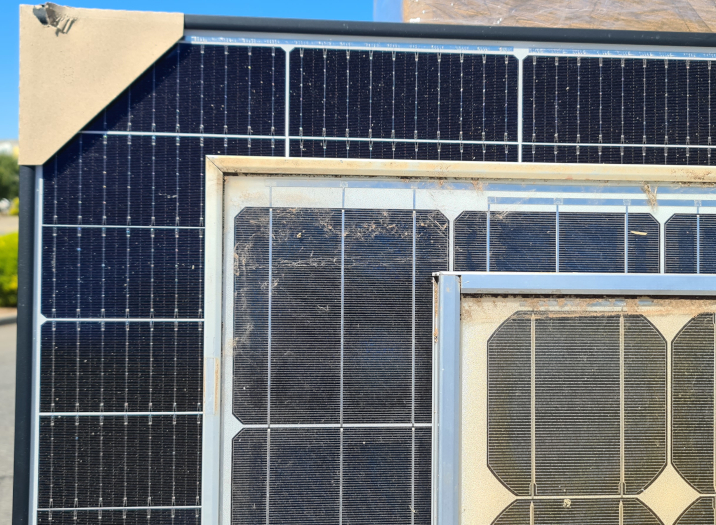
Age and technology are the other constraints. A panel's resale value falls as its warranty runs down and its output lags current modules: a 2017 panel now produces roughly half the wattage of a new one from the same footprint, so buyers pay less and fewer want it. This is why genuinely used modules have fallen to around 1% of secondary-market listings, with the balance being surplus new stock clearing through the same channel.
For the full economics of why resale cannot scale to absorb the coming volumes — modelled market by market — check this article.
The takeaway:
Resale is a legitimate but narrow outlet, best suited to younger panels — realistically under about eight years old — in good condition, moving in small volumes to nearby buyers. For those assets it is worth pursuing, and it beats both landfill and recycling on value recovered.
But it is not a plan for the bulk of what is coming. The volumes retiring in the 2030s are concentrated in exactly the high-cost, space-constrained, regulated markets where used panels are hardest to deploy, and the resale window for any given panel closes as it ages, as new-panel prices keep falling, and as the market grows pickier about condition and documentation. Treat resale as a way to extract residual value from a small subset of assets — not as an end-of-life strategy for a portfolio.
Recycling: the most expensive line item, the most recovered value
Recycling is the most expensive route at the point of disposal — currently in the range of $5 to $25 per panel against a few dollars for landfill — and for years that gap was the industry's central problem, because the materials recovered were often worth less than the cost of collecting, transporting, and processing the modules. That equation is now shifting, from both ends.
On the cost side, dedicated high-throughput facilities are driving processing costs down and recovery rates up. Modern advanced recycling can reclaim the large majority of a panel's value — not just the aluminum frame and glass, but the silver, copper, and high-purity silicon that carry most of the material worth and are the hardest to recover. On the value side, the metals coming out of a panel are precisely those under supply pressure from electrification, and recovered aluminum alone takes roughly 95% less energy to produce than aluminum smelted from ore. As recovery rates climb and virgin-material prices stay elevated, the net cost of recycling keeps falling — and in the right conditions approaches break-even.
Crucially, recycling is the only option that is both compliant everywhere and scalable to the volumes actually coming. It carries no landfill-ban or hazardous-waste exposure, it satisfies the decommissioning and financial-assurance requirements now being written into law in states like Texas and North Carolina, and it returns critical materials to a supply chain that needs them. What began as the premium, do-the-right-thing choice is becoming the default as the alternatives are regulated out.
For how recovery actually works, and why it matters for material security, check our article.
.png)
The takeaway:
Recycling costs the most upfront today, but it is the only route whose economics and regulatory standing are both moving in its favor. Processing costs are falling, recovery rates and recovered-material value are rising, and every new state rule narrows the gap between what recycling costs and what avoiding it costs.
For the bulk of decommissioned volume — and for any owner who will still hold or sell assets when the EPA's universal-waste rule and state landfill bans take full effect — recycling is the route that will remain open, compliant, and defensible. The owners moving now are qualifying recyclers and building end-of-life terms into contracts early, while capacity exists and ahead of the volume surge that will tighten it.
So what should you do?
For a handful of working panels in good condition, resale is worth exploring. For everything else — and certainly for utility-scale volumes — the realistic choice is narrowing to recycling, both because landfill is becoming legally and reputationally untenable and because recovered-material value is climbing. The owners getting ahead of this are deciding early, while capacity is available and before regulation forces the timing.


.svg)